Up to 4 Free Days of Transit Time
Two transit days each way are excluded from rental period


Description
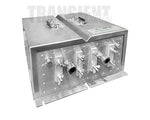
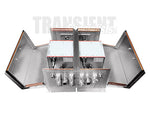
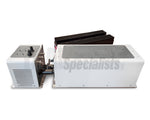
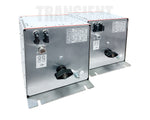
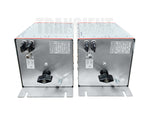
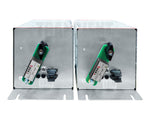
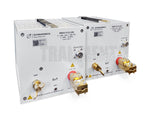
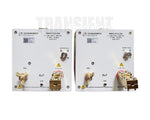
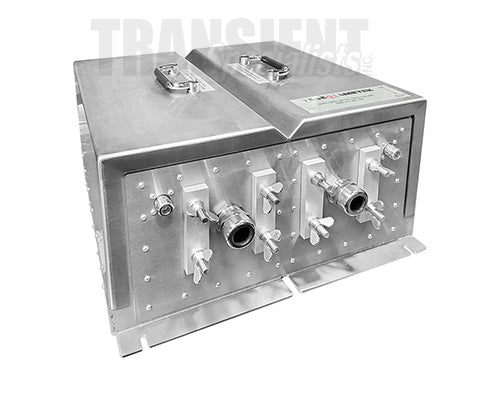
The shielded metal enclosure (SME) is designed to contain two High Voltage Artificial Networks, HV-AN 150 according to ISO/DTS 7637-4 and the HV part of CISPR 12 (draft), CISPR 25, ECE No. 10 R05/06 and ISO 11452-1. It is applicable to all electrical vehicles, i.e., battery, hybrid or plugin electric vehicle. The design of the SME HV-AN 150 allows easy handling when connecting the coaxial HV + and HV lines to the HV-AN.
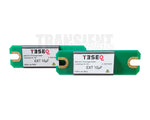
The cable shield is contacted over a large area through the massive terminals. The inner conductor is strain-relieved by the cable gland and led to the connections of the HV-AN. The SME HV-AN 150 allows the two individual HV AN-150 to be directly connected to the ground plane and allows access to each HV AN. In addition to the box, the scope of delivery of the SME HV-AN 150 includes two RF cables and two connection brackets. The HV-AN 150, the calibration option and the external 10 μF for RTCA/DO-160G must be ordered separately
Compare LISNs, current probes, transient limiters, EMI receivers, and spectrum analyzers for conducted emissions. Select by frequency range, current rating, standards, and requirements.


 info@transientspecialists.com